A Comprehensive Look at How Posture Affects the Shoulder
Shoulder pain is an all-too-common complaint, making routine activities like lifting, typing, and even sleeping difficult. It seems like every week we get a patient who comes to us with shoulder pain related to poor postural habits.
A lot of people know the old song about how the foot bone is connected to the knee bone (and the knee bone is connected to the thigh bone, and so on). In the world of physical therapy, we call this regional interdependence. This means something in one area of the body is affecting another area. As the song says: it’s all connected.
Well, this is definitely true when it comes to the functioning of our shoulder joints. Poor postural habits and prolonged slumped postures put the shoulder in a vulnerable position, making it susceptible to pain or injury. The good news is our therapists at The Center of Medical Arts have extensive training in identifying all the factors that are contributing to your shoulder pain and, most importantly, how to resolve them, one by one!
Patient Success
“I want to thank the CMA team for their help with the process of trying to relieve the neck pain that I’ve suffered with for over a year. I have to admit I was a bit skeptical at first with some of their therapies, but after only a few weeks of treatment I am seeing great results and feeling optimistic that I can avoid the surgery that the doctor suggested. The decompression and infrared therapies are great, along with my first experience with the cupping massage. I would highly recommend CMA and encourage those who have not gotten results with traditional physical therapy to give them a try. Thanks Muna!” – Jean V.
How Posture Impacts the Shoulder
One significant factor contributing to shoulder pain is Upper Crossed Syndrome (UCS). This condition is characterized by postural changes that affect how the muscles of our upper back and shoulder girdle work, which in turn affects the normal movement patterns in the entire upper portion of the body.
The classic signs of Upper Crossed Syndrome include:
- Forward head posture: The head is positioned forward in relation to the shoulders.
- Rounded shoulders: The shoulders are rounded forward, causing the upper back to appear hunched.
- Increased thoracic kyphosis: The upper back has an increased curvature, leading to a rounded appearance.
- Protracted shoulder blades: The shoulder blades are positioned more forward and away from the spine.
- Weak deep neck flexors: The muscles at the front of the neck that help stabilize the head are weak.
- Tight pectoral muscles: The muscles in the chest area are tight and may contribute to the rounded shoulder posture.
- Weak scapular stabilizers: The muscles that stabilize the shoulder blades are weak, leading to altered movement patterns.
These issues often lead to shoulder pain, limited range of motion, and impaired muscle function. Although the signs are common in a lot of people, not everyone with these signs will have the same symptoms. This is why it is essential to consult one of our physical therapists to identify your specific needs and design a tailored treatment plan that addresses your situation.
The Role of Physical Therapy in Resolving Your Pain
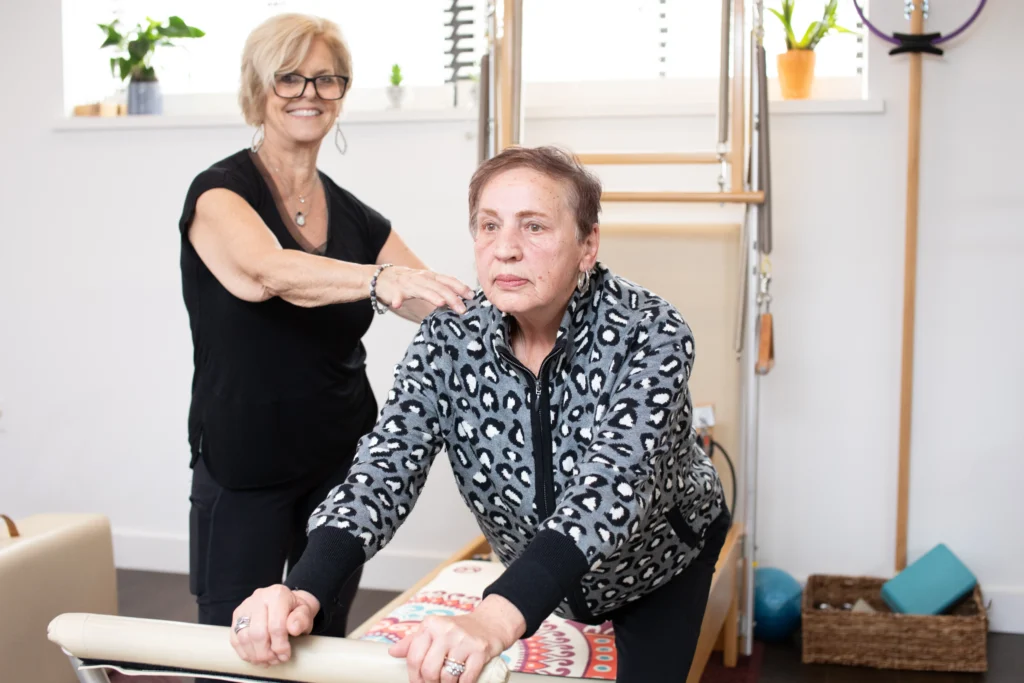
The first step to resolving your shoulder pain is a comprehensive evaluation. Our physical therapists will conduct a thorough history and physical exam that includes an assessment of your posture as well as the function of your shoulder blade musculature to identify any obvious changes to muscle activation and movement patterns.
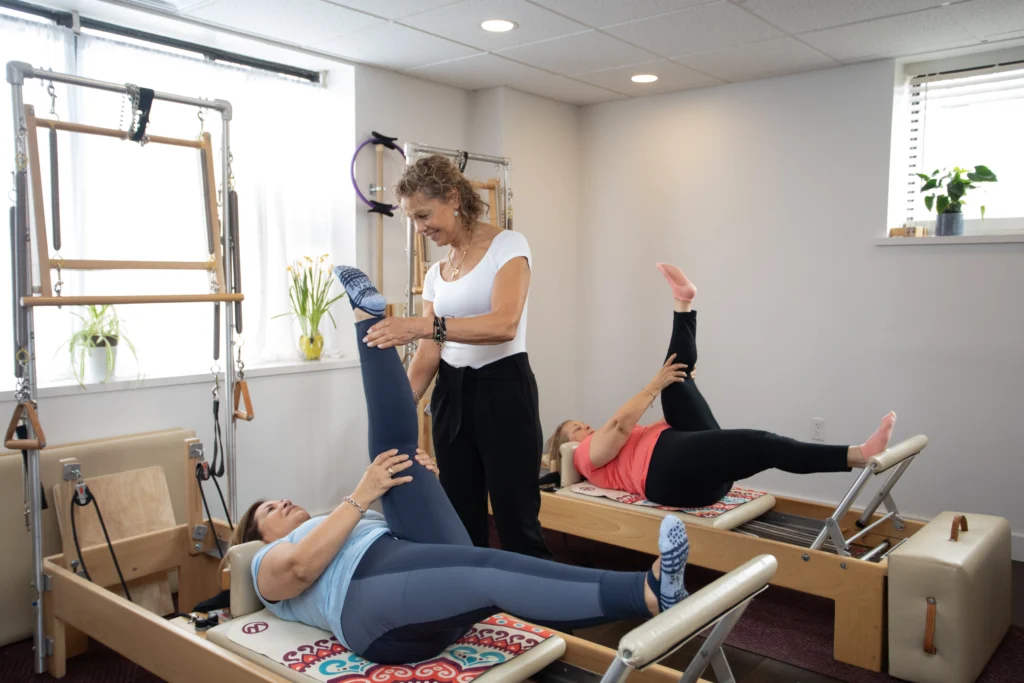
Based on the assessment, our physical therapists will design tailored exercise regimens that address not only muscle length and strength but also neuromuscular factors. This could lead to more lasting relief and functional improvement.
Our team uses a functional approach that is rooted in neurology. We consider the interaction between your nervous system, biomechanics of your spine and shoulder joints, as well as muscle function. This allows us to not only identify and address any imbalances in muscle length and strength, but also from neuromuscular factors like muscle recruitment.
These exercises may include work on your spinal joint mobility and strengthening exercises to correct any postural dysfunctions contributing to your conditions. Our team spends a lot of time educating you about how you are holding and moving your body to ensure you have the tools to train your body in the proper movement patterns that help to correct imbalances and offer lasting relief.
Take the First Step Towards Lasting Relief Today
If you’re experiencing persistent shoulder pain, limited range of motion, or discomfort in your upper body, the time to act is now. These signs are not just distressing; they can have a long-term impact on your quality of life and overall well-being. Reach out to The Center of Medical Arts today for a comprehensive assessment and personalized treatment plan designed to restore balance to your muscles, improve your posture, and, most importantly, alleviate your pain!
Go to the Pain, Not Through the Pain
The days of “no pain, no gain” are hopefully in the past. The idea of emphasizing pushing through discomfort to achieve results is not an effective solution for most people dealing with a painful condition, injury, or chronic condition. In fact, recent research suggests that a more holistic approach is effective and, indeed, safer for patients.
Pain is our body’s way of letting us know that something is happening in the body. When a nerve ending is triggered, an impulse travels to the brain, alerting us that something is happening. It is a warning sign or an alarm. How this impulse is interpreted varies from person to person and is influenced by a multitude of factors.
Aggressively pushing through pain can worsen the underlying issues and potentially result in long-term damage. The key is getting help from people who work with painful conditions every day, like our therapists at The Center of Medical Arts!
How Physical Therapy Can Help You Find Relief
In cases of musculoskeletal disorders and injuries, applying excessive stress on already agitated tissues can prolong the healing process and even cause further injury. In comparison, going to the pain but not through it means cautiously approaching the edge of discomfort without crossing it, which can help your body progress without delaying your recovery.
Our objective is to work within a “therapeutic window”: a range of activities that stimulates the body’s natural healing mechanisms without triggering negative responses.
At The Center of Medical Arts, we educate our patients about pain to help them understand their conditions better and actively participate in treatment. Our therapist can help you learn “pacing,” where activities are broken down into manageable parts, helping you to avoid extreme ups and downs of feeling good one day and an increase in pain and inactivity the next.
By respecting the body’s pain signals and working within a therapeutic window, our approach aims to achieve long-term functional gains without the risks associated with pushing through pain.
Acupuncture/Dry Needling: A Holistic Approach to Pain Management
Living with chronic pain or persistent discomfort can be incredibly challenging, affecting every aspect of your daily life. If you’ve been searching for a holistic and effective solution, acupuncture might be the answer you need. Acupuncture offers a proven method to alleviate pain, reduce stress, and enhance overall well-being. By targeting specific points on the body, this time-honored therapy provides relief and promotes healing, making it a valuable addition to modern healthcare strategies.
Today, The Center of Medical Arts provides acupuncture therapy as part of our total wellness package. Acupuncture, both an art and a science, was developed in China more than 3,000 years ago to restore and maintain balance in the body, supporting the body’s natural ability to heal itself.
Recipe of the Month: Creamy Pumpkin Soup

Ingredients:
- 1 medium yellow onion
- 3 cloves garlic
- 1 large bunch fresh thyme
- 2 tablespoons olive oil
- 1 (15-ounce) can pumpkin purée (about 2 cups)
- 3/4 teaspoon kosher salt
- 1/2 teaspoon ground cumin
- 1/4 teaspoon freshly ground black pepper
- 1/8 teaspoon ground ginger
- 1/8 teaspoon cayenne pepper
- 2 cups low-sodium vegetable broth
- 2 tablespoons maple syrup
- 2 tablespoons heavy cream
- Toasted pumpkin seeds and flaky sea salt, for serving (optional)
Instructions:
- Prep the ingredients. Very finely chop 1 medium yellow onion. Finely grate 3 garlic cloves. Pick the leaves from 1 large bunch fresh thyme until you have 2 tablespoons.
- Cook the aromatics. Heat 2 tablespoons olive oil in a medium saucepan over medium heat until shimmering. Add the onion and garlic and cook until fragrant, 3 to 4 minutes.
- Add the pumpkin and spices. Add the thyme, 1 (15-ounce) can pumpkin purée, 3/4 teaspoon kosher salt, 1/2 teaspoon ground cumin, 1/4 teaspoon black pepper, 1/8 teaspoon ground ginger, and 1/8 teaspoon cayenne pepper. Cook over medium-low until steaming and fragrant, about 5 minutes.
- Add the vegetable broth. Add 2 cups low-sodium vegetable broth and cook, stirring constantly, for 3 to 4 minutes. (The mixture will bubble.)
- Add the maple syrup and cream. Remove the pot from the heat. Add 2 tablespoons maple syrup and 2 tablespoons heavy cream, and stir to combine. (At this point, for a creamier soup, you can use an immersion blender or transfer to a blender to purée until it reaches your desired consistency.)
- Garnish and serve. Serve warm, garnished with toasted pumpkin seeds, flaky salt, fresh thyme leaves, and more black pepper.

Staff Spotlight: Muna Swairjo
MSPT, Cert DN, CLT
As the proud founder and owner of The Center of Medical Arts I am passionate about helping individuals reclaim their mobility and improve their quality of life through personalized physical therapy. With over 30 years of experience in the field, I earned my degree in Physical Therapy from University of Ulster , UK and have providing care as outpatient rehabilitation for all ages from 12 – 90.
At CMA we pride ourselves on creating a warm and welcoming environment where every patient feels valued and heard. Our dedicated team utilizes the latest techniques and evidence-based practices to develop individualized treatment plans tailored to each patient’s unique needs and goals.
When I’m not in the clinic, you can find me dancing and mastering Argentine Tango Dance, hosting events to stay connected to the community at many levels of arts, music and wellness. I look forward to partnering with you on your journey to recovery and wellness!
Hosting Thanksgiving Dinner?
Manage Stress with These Tips

We love Thanksgiving at The Center of Medical Arts. It’s a time to gather with friends and family, enjoy a great meal, and give thanks for all of the year’s blessings. But we also know the big day can be stressful—especially if you’re hosting.
Here are a few simple tips to stay happy and healthy this Thanksgiving:
- Try some deep breathing exercises. In the thick of cooking five different side dishes and feeling overwhelmed? Try box breathing, a simple technique in which you slowly breathe in and out for 3-4 counts.
- Fix a balanced plate. Rather than stressing about overindulging, just make sure to add some green veggies to your plate alongside the cornbread stuffing and fried turkey.
- Don’t forget your post-meal walk. If you prepped dinner, let someone else take care of the dishes while you take a relaxing stroll around the neighborhood. Relax–you earned it!
Don’t Let Your Health Insurance Benefits Go to Waste — Schedule Your PT Today!
As the year comes to a close, now is the perfect time to take advantage of your health insurance benefits before they reset. If you’ve met your deductible, your out-of-pocket costs for physical therapy could be significantly reduced — or even fully covered.
The Center of Medical Arts is here to help you move better, feel stronger, and finish the year pain-free. Whether you’re recovering from an injury or managing chronic pain, our expert therapists are ready to support your health goals.